Emotional intelligence
Understand the true why with Outset’s Emotional Intelligence tools. Our AI-moderator continuously reads participant expression and detects emotional signals in real time, probing when it matters and surfacing sentiment patterns across your study.
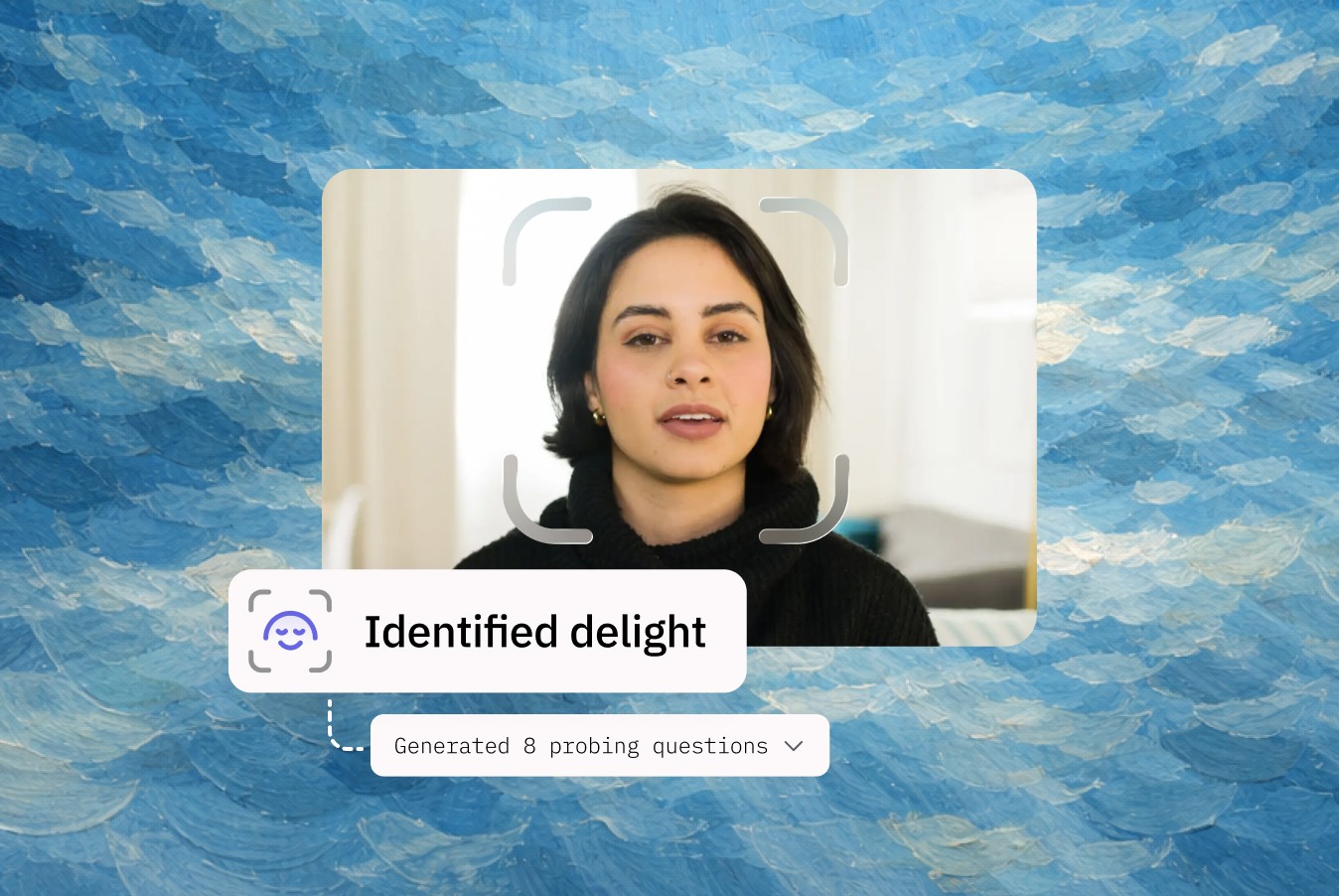












Emotion-aware interviewing, from start to finish
Real-Time Emotion Detection
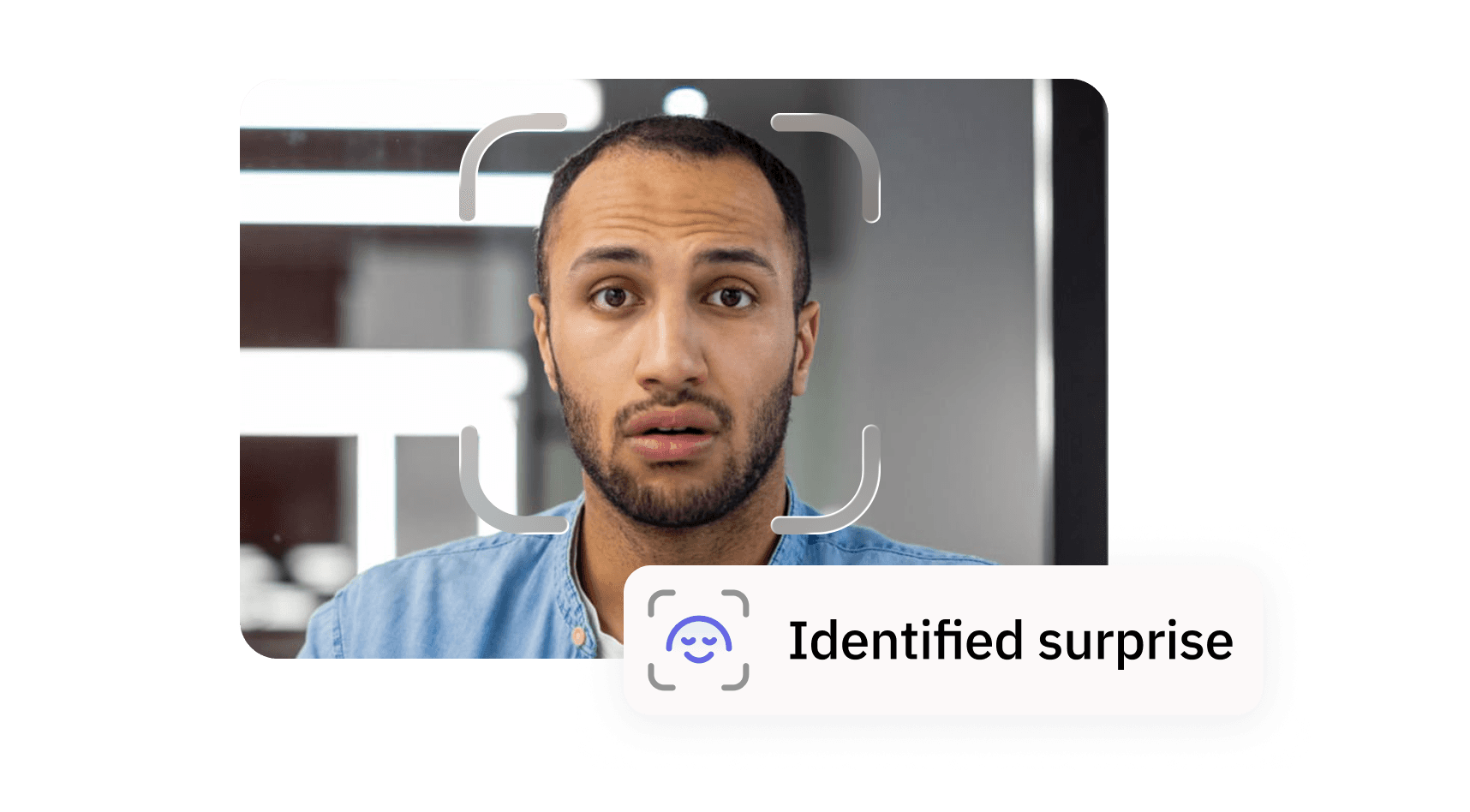
Outset's Emotional Intelligence AI processes participant video and tone continuously throughout the interview, identifying time-stamped moments of anger, disgust, fear, happiness, sadness, surprise, and neutral states.
Session-Level Sentiment Summary
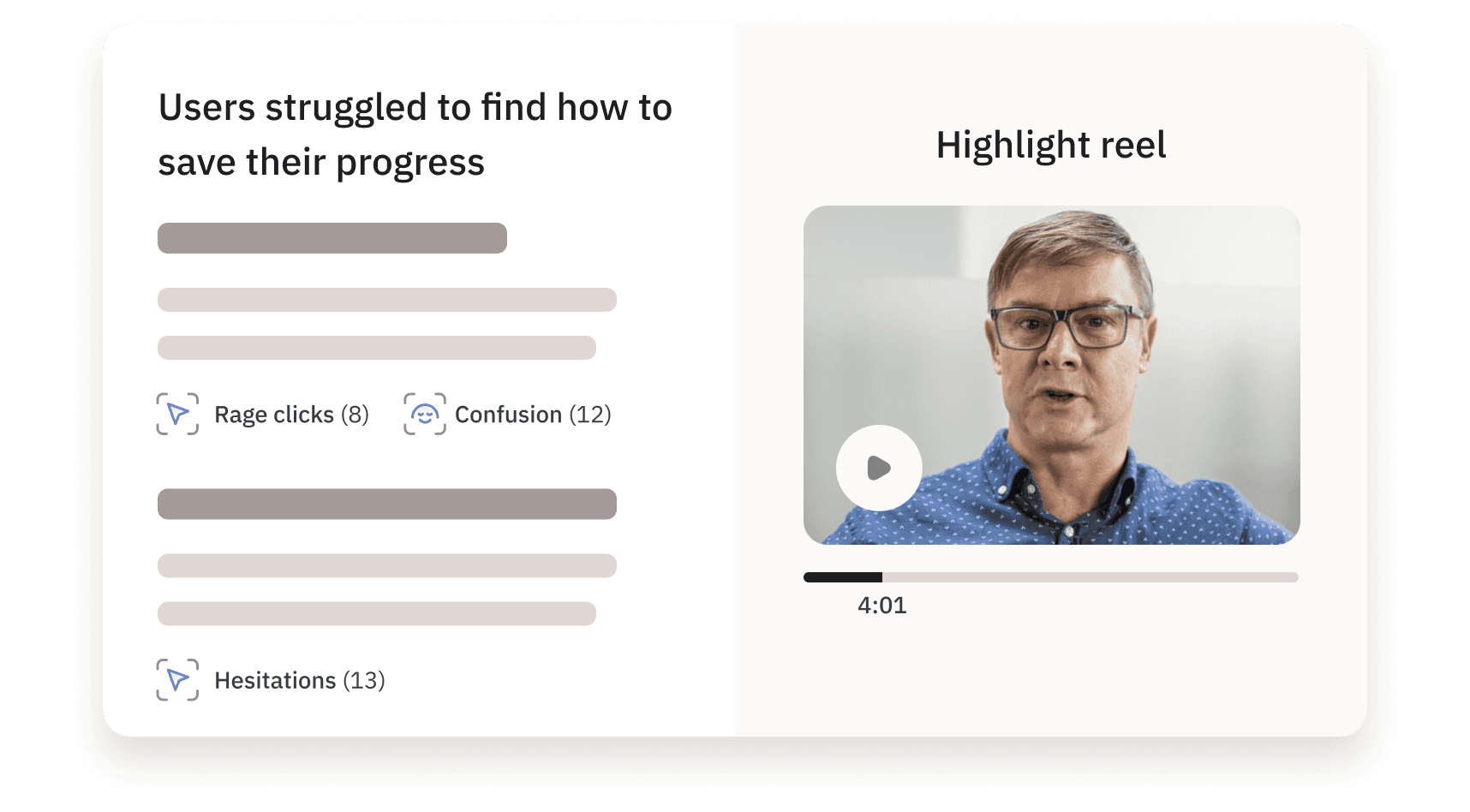
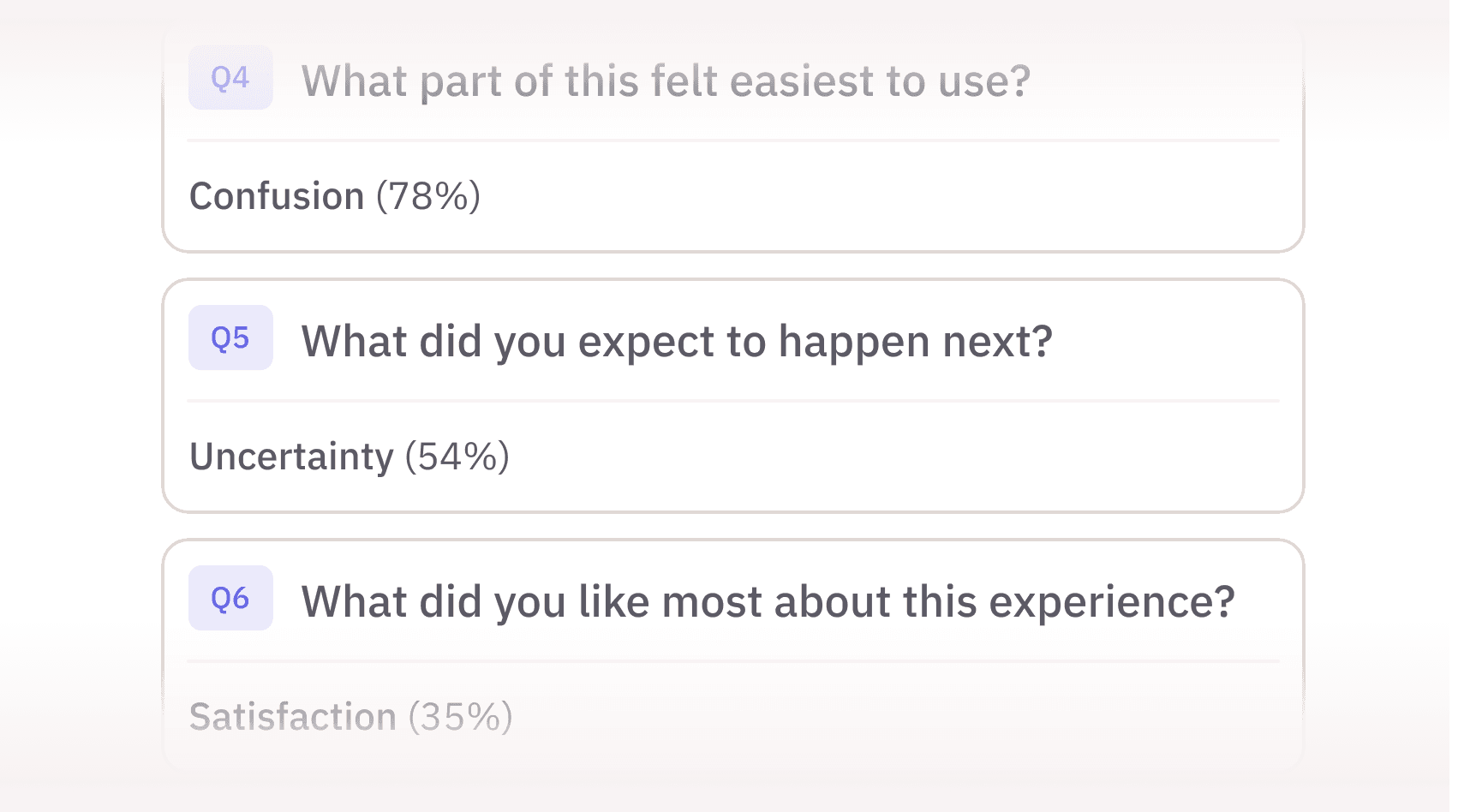
Instantly generate a comprehensive report surfacing emotional highs and lows, correlating them to specific tasks or questions, and identifying highlight moments with direct links to timestamps.
Intelligent Probing on Emotional Signals
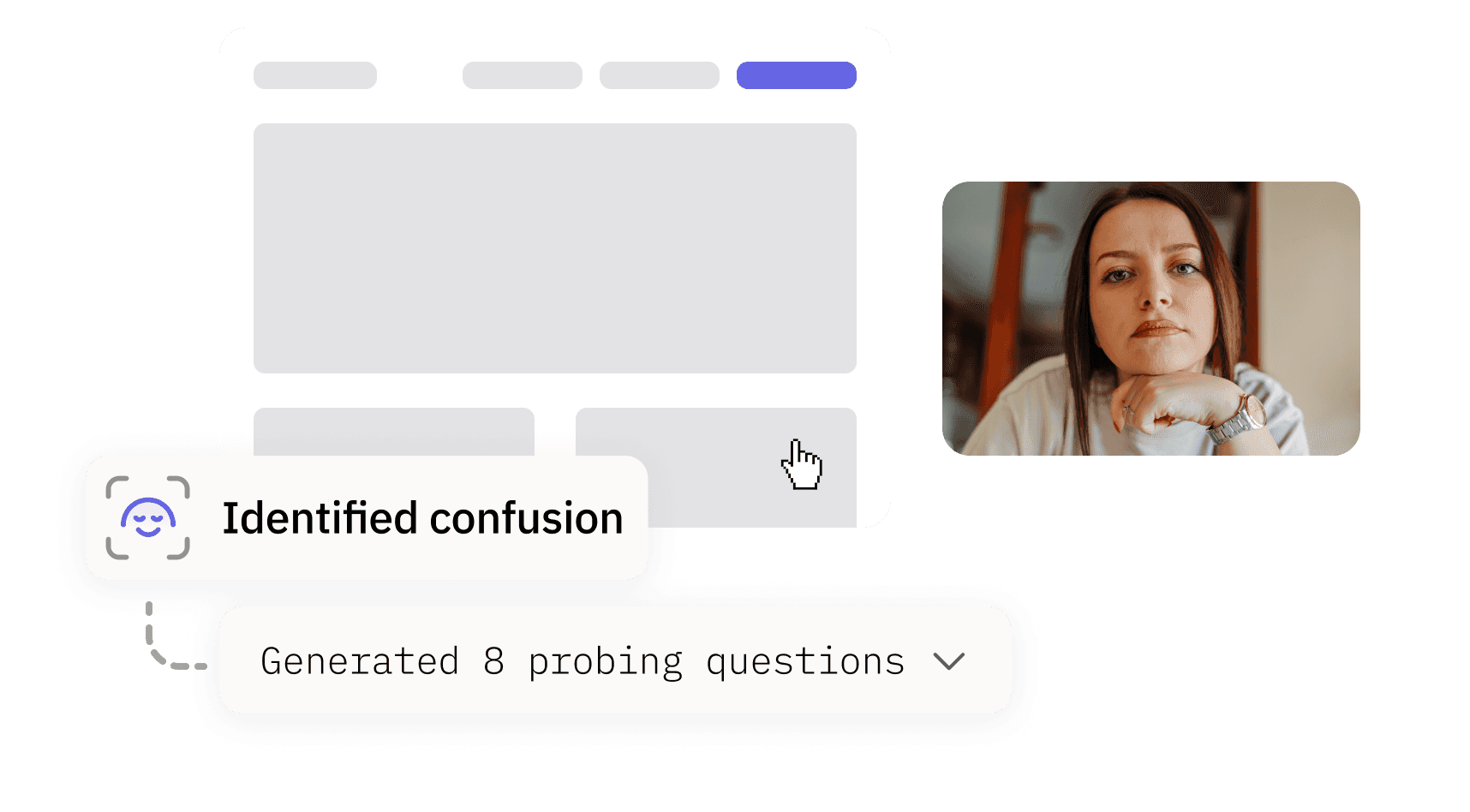
Emotional Intelligence tools ask targeted follow-up questions based on emotional triggers, keeping the study flow natural while ensuring the most meaningful moments are explored.
The advantage of
Outset's Emotional Intelligence platform
Capture What Participants Don't Verbalize
Facial expressions reveal reactions that participants often can't or won't articulate. Outset’s Emotional Intelligence tool automatically flags and records those moments.
Ground Insights in Observed Behavior
Every emotional signal includes observable evidence: specific visual cues that triggered the detection. No ungrounded claims or black-box sentiment scores; just evidence-backed analysis researchers can stand behind.
Reduce Analysis Time, Increase Confidence
Instead of reviewing hours of video to find emotionally significant moments, researchers get a prioritized, time-stamped summary of the session's emotional arc, ready to act on.
Built for all studies, since true emotion always matters
Monitors participant screens — tracking clicks, hovers, navigation paths, and friction points — then probes automatically based on what it observes, helping you build the best product experience.



Message & Copy Testing
Understand whether your value proposition, headlines, or messaging lands the way you intend, catching neutral or negative reactions you’d otherwise miss.

FAQs about Emotional Intelligence in Research
Explore common questions about how an emotional intelligence platform works, why emotional signals matter, and how AI emotional intelligence is transforming modern research and insight generation.
What is an emotional intelligence platform?
An emotional intelligence platform is a type of software that detects, analyzes, and interprets human emotions during research interactions. Using video, audio, and behavioral signals, an AI emotional intelligence platform helps researchers understand how participants truly feel, not just what they say, delivering deeper, more accurate insights at scale.
Why is emotional intelligence important in research?
Understanding why emotional intelligence is important comes down to depth of insight. Participants often filter or rationalize their responses, but emotions reveal instinctive reactions. By capturing real-time emotional signals, researchers can uncover hidden friction, genuine excitement, or hesitation, leading to more confident decisions and better outcomes.
How do teams test emotional intelligence in research studies?
Testing emotional intelligence in research involves capturing and analyzing emotional responses throughout participant sessions. With modern emotional intelligence software, teams can automatically detect emotional patterns, compare responses across participants, and identify moments of high impact, without manual review of hours of recordings.
What are emotional awareness interview questions?
Emotional awareness interview questions are prompts designed to explore how participants feel during an experience, not just what they think. Examples include: “How did that moment make you feel?” or “What stood out to you emotionally?” When combined with an emotional intelligence solution, these questions become even more powerful by validating responses against observed emotional signals.
How does AI and emotional intelligence work in interviews?
AI emotional intelligence uses machine learning to analyze facial expressions, tone of voice, and behavioral cues during interviews. It detects emotional states like frustration or delight, timestamps key moments, and enables intelligent follow-up questions, transforming traditional interviews into dynamic, insight-rich conversations.
What should you look for in an emotional intelligence solution?
A robust emotional intelligence solution should include real time emotion detection, evidence-backed insights, scalable reporting, and seamless integration into research workflows. The best emotional intelligence software also combines behavioral and emotional data, helping teams connect what users do with how they feel, all within a single platform.